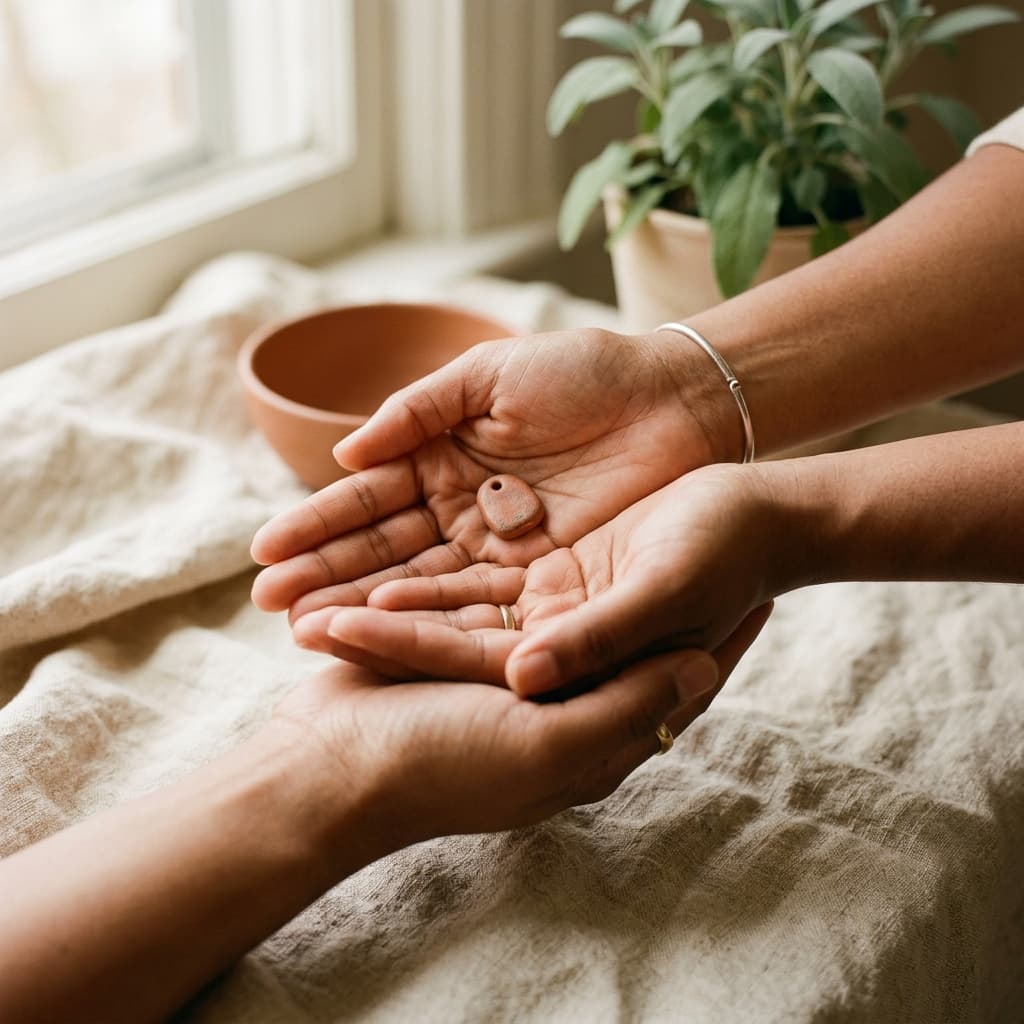
Someone told me I looked well last Tuesday. My immediate response was to deflect. I said something about being tired, about not having slept enough, about the lighting in the room being generous. I dismantled the compliment with the efficiency of someone defusing a small bomb. It was only later, walking home, that I realized what I had done. Someone had offered me something kind, and I had refused to hold it.
But what I noticed first, before the deflection, before the words, was the flinch. A contraction in my upper chest, just below the collarbone, a tightening that arrived before the compliment had finished landing. My shoulders pulled slightly inward, as if my body were trying to close a door the words had opened. My eyes dropped to the table. My hand reached for my cup, a displacement gesture so automatic I did not notice it until I reconstructed the moment later. The body refused the compliment before the mind had a chance to consider it.
This matters. It is a pattern so deep that I barely notice it happening. A friend offers to help carry groceries, and I say I am fine, while my jaw sets and my grip tightens on the bags. A colleague says my work was good, and I list everything I would change, while my stomach contracts against the praise like a fist closing. Someone asks how I am, genuinely, and I give them the edited version, the one that requires nothing from them, while my chest stays closed and my breathing stays shallow.
Why We Deflect
There is a social script at work here. We are taught that receiving makes us vulnerable. To accept help is to admit need. To accept a compliment is to risk seeming vain. To accept care is to create a debt. Somewhere along the way, self-sufficiency became the highest virtue, and needing anything from anyone became a quiet form of failure.
But there is something deeper beneath the script. For many of us, deflecting kindness is a form of control. When I refuse your help, I stay in charge of the situation. When I diminish your compliment, I keep the narrative about me in my own hands. Receiving requires surrender. It requires standing still while someone sees you, and trusting that what they see is not too much, or not enough, but simply you.
What the Body Does When Kindness Lands
Stephen Porges, the neuroscientist behind polyvagal theory, has described how the feeling of being safely received by another person, of being held, seen, or cared for, activates the ventral vagal complex and signals safety to the nervous system. This is physiological. When someone offers you kindness and you let it land, the vagus nerve carries the signal of safety from the brainstem to the heart, the lungs, the gut. The heart rate slows. The breathing deepens. The muscles around the eyes soften, which is why people who feel truly seen look, from the outside, like they have just exhaled something they were carrying.
But the landing can only happen if you do not intercept it. When I deflect a compliment, I am intercepting the signal before it reaches the ventral vagal system. The safety cue is offered, and my chest closes against it, and the nervous system never gets the message. I stay in the sympathetic register: alert, guarded, self-sufficient, and subtly starved for the very connection I just refused.
Receiving is not passivity. It is the courage to let someone else’s kindness reach you without building a wall to stop it.
Small Practices
I have started practicing in small ways. When someone compliments me, I say thank you. Just that. No qualifier, no deflection, no reciprocal compliment offered as a reflex. The pause after thank you feels vast and exposed, like standing in an open field. But I have started paying attention to what my body does in that field. The first few times, the chest stayed clenched. The jaw stayed tight. The thank you was a word, not a reception. But by the fourth or fifth time, warmth spread across my face, and it was not embarrassment. A softening behind the sternum. The faintest loosening of the grip on the cup.
When someone offers help, I have started saying yes more often, even when I could manage alone. Not because I need the help in every case, but because accepting it changes the shape of the relationship. It lets the other person give. It creates a circuit that runs both ways. I have noticed that the people in my life seem lighter when I let them contribute, as if my constant independence had been quietly burdening them too.
The next time someone offers you something kind, whether it is a word, a gesture, or a hand, try receiving it fully. Do not rush to reciprocate. Do not explain why you do not deserve it. Just let it arrive. Say thank you. And then notice what happens in your body: does the chest open or close? Does the breathing deepen or shallow? Does the jaw soften or set? You do not need to change what you find. Just notice. That noticing, that willingness to feel what receiving actually feels like in the body, is the practice. If it feels like too much today, let it go. Some practices need a season of readiness before the ground can hold them.
