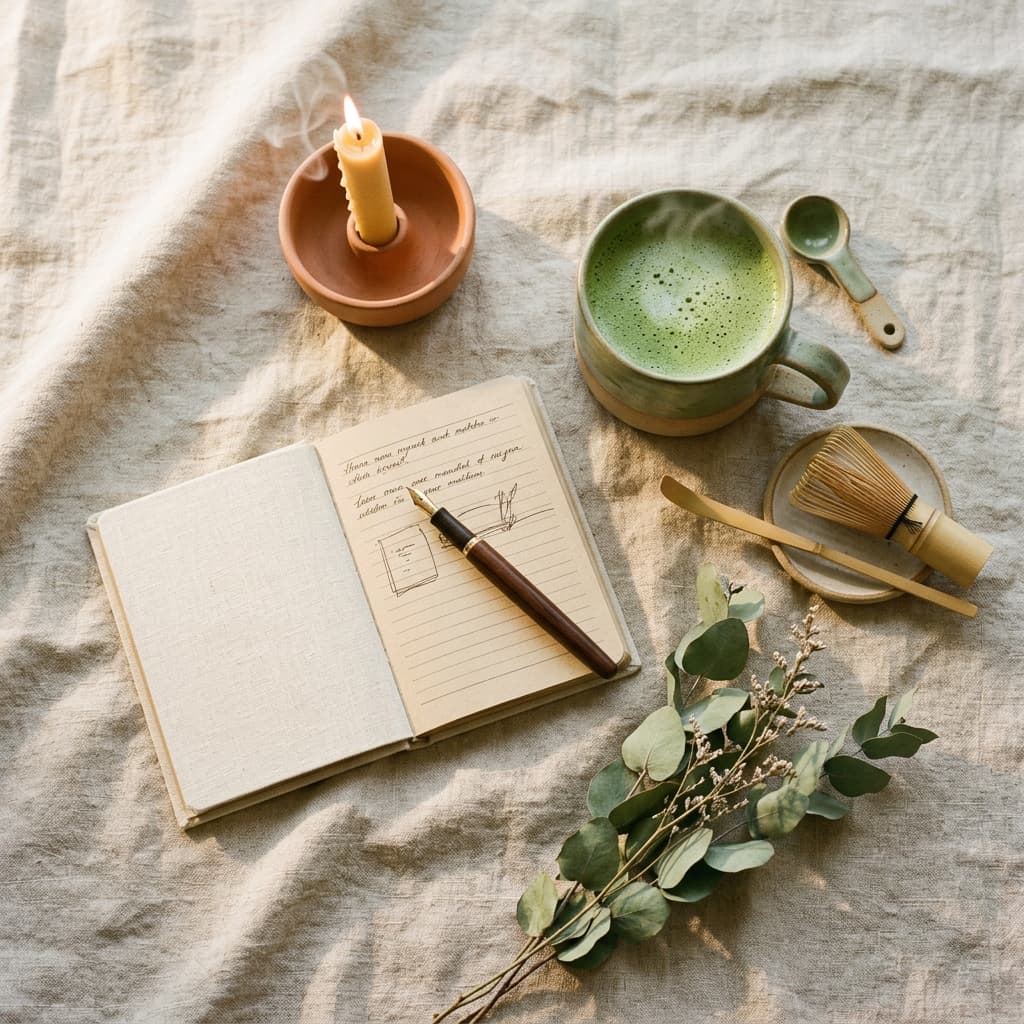
The water is always cold when I first turn on the tap. I hold my wrists under it for five seconds, feeling the shock travel up through my forearms, and then it warms. This is how every morning begins. Not with a thought or a decision or an alarm, but with the cold water on the insides of my wrists, where the veins are close to the surface and the skin is thin enough to register the temperature change in under a second. It is the first conversation I have each day, and it is between my body and the water, and it happens before my mind has fully arrived.
I did not design this ritual. It designed itself. Three years ago, during a winter that felt like it would not end, I was standing at the bathroom sink at six in the morning, and my hands went under the tap before I was fully awake, and the cold made me gasp, and the gasp woke me up more thoroughly than the alarm had, and I noticed: I am here. The next morning I did it again. The morning after that, again. By the end of the week, the ritual had installed itself in the architecture of my morning, and I have not missed a day since.
The Difference Between Ritual and Routine
A routine is a sequence you perform because it is efficient. A ritual is a sequence you perform because it means something. The difference is in the quality of attention you bring to them. I can brush my teeth as a routine, which means I am brushing my teeth while planning my afternoon, or I can brush my teeth as a ritual, which means I am brushing my teeth: feeling the bristles against my gums, tasting the mint, noticing the small vibration in my hand. The actions are identical. The body’s experience of them is entirely different.
Tara Brach, the psychologist and meditation teacher, describes a concept she calls the sacred pause: a deliberate moment of stopping before the habitual response takes over. Rather than slowing down for its own sake, Brach’s pause interrupts the momentum of autopilot long enough for awareness to catch up to action. A morning ritual, the way I practice it, is a series of sacred pauses strung together: each action a small interruption of the unconscious momentum that would otherwise carry me from bed to desk without ever arriving in my own body.
The Anchors
I have four anchors. They are not grand. They do not photograph well. They are not optimized for anything except the specific task of bringing me into my body before the day takes me out of it.
The first is the cold water on the wrists. Five seconds, both wrists, feeling the temperature change as the cold gives way to warm. It is a threshold crossing: the body’s way of marking the transition from sleep to waking, from the private world of the bed to the shared world of the day.
The second is the kettle. I fill it and stand beside it while it heats, and I do not leave the kitchen. This sounds trivial, but it is the hardest anchor to maintain, because the temptation to use the boiling time productively is fierce. Check the phone. Start the laundry. Wipe the counter. Instead, I stand. I feel my feet on the floor. I listen to the kettle’s rising hum, the specific frequency that changes as the water approaches boiling, and when the click comes, the abrupt silence after the element shuts off, I notice the silence the way you notice a held breath releasing.
The third is the first sip of tea, taken standing at the counter, before I sit down. I hold the mug with both hands and feel the heat through the ceramic, a warmth that moves from my palms into my wrists and up through my forearms, reversing the path of the cold water from twenty minutes earlier. The first sip is always too hot. I take it anyway. The slight burn on my upper lip is part of the ritual: a small, sharp sensation that pulls my attention to the exact surface of my mouth.
The fourth is three minutes of sitting at the kitchen table with the mug in my hands and my eyes on the window. Not meditating. Not thinking. Just sitting with the tea and the light and the specific quality of early morning silence, which is not the same as nighttime silence. Morning silence has an anticipation in it, a gathering, as if the day is holding its breath before it begins.
What the Anchors Hold
On the days I skip the ritual, I can feel the absence. Not immediately, not as a thought, but as a quality of ungroundedness that settles into my body by mid-morning. A slight hovering, as if my feet are not quite making full contact with the floor. A shallow quality to the breathing that I do not notice until someone asks me a question and I realize I have been holding my breath. A tendency to reach for my phone not because I need it but because my hands need something to hold, having missed the mug, the tap, the kettle, the anchors that give them their morning work.
The ritual does not prevent difficult days. It does not make the afternoon less overwhelming or the evening less exhausting. But it provides a reference point: a body-level memory of having been present, even briefly, before the day’s demands arrived. And on the hardest days, that reference point is what I return to. I can feel the cold water on my wrists even when I am sitting in a meeting twelve hours later. The body remembers the morning the way a hand remembers the shape of a familiar mug: without effort, without thought, just the knowledge of having been held.
A ritual is not a routine with better lighting. It is the body’s way of saying: before everything else, I am here.
If you want to build a morning anchor, start with one. Not four, not a sequence, just one physical act that you can do with your full attention every morning. It might be the cold water. It might be holding the mug. It might be standing at the window for thirty seconds and feeling the light on your face. The action does not matter. The attention does. If you can do one thing each morning and feel it, actually feel it in your hands, your feet, your skin, that is enough. That is the whole architecture. Everything else is just additional rooms in a house that was built the moment you decided to arrive in your body before you arrived at your desk.
